Visual Lab
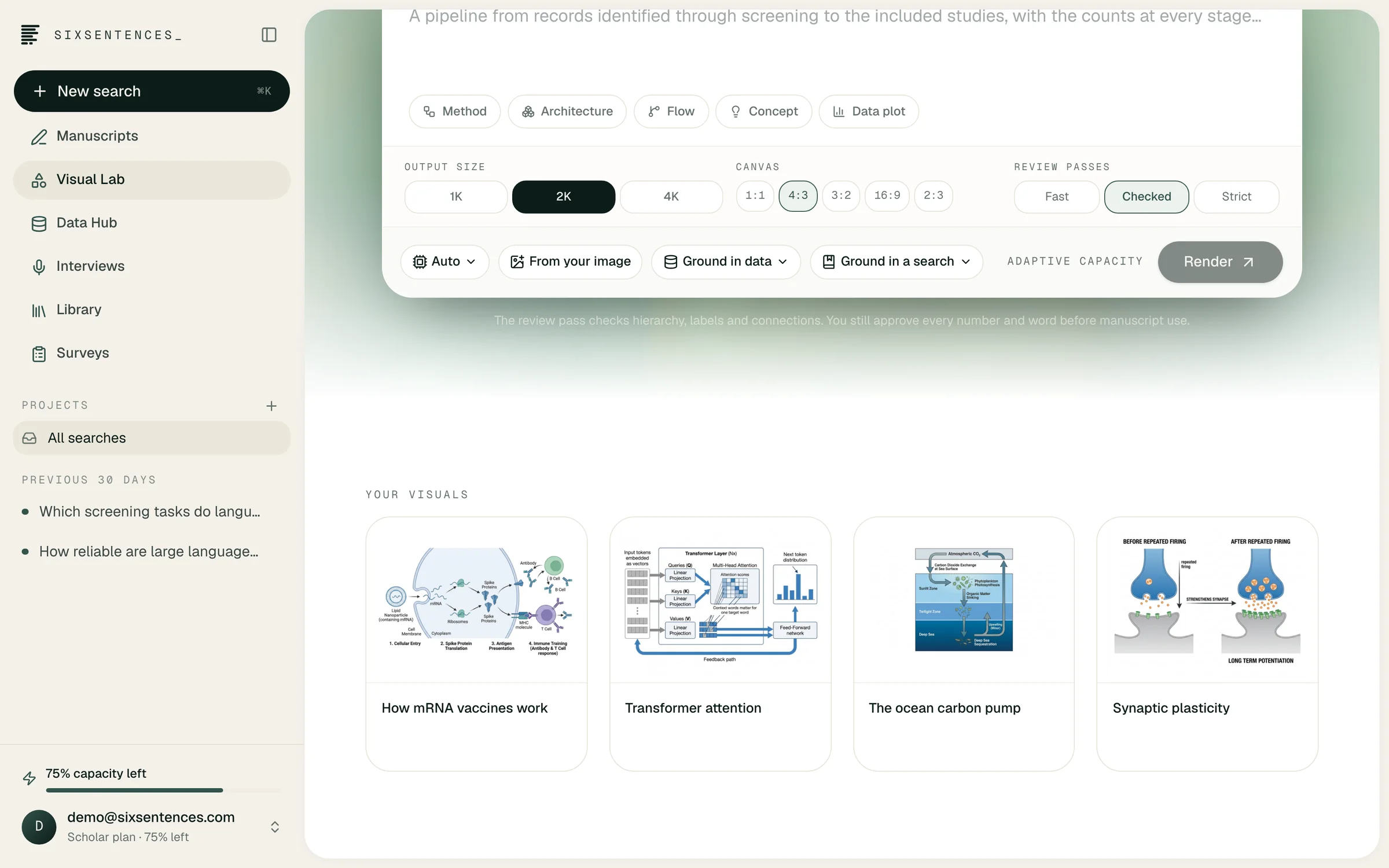
The Visual Lab plans and renders scientific figures from a brief, then applies a review pass for hierarchy, labels and connections before the researcher approves the output.
In plain terms
- 01
Ground the brief
Use a dataset, literature search, library source or explicit prompt as the material from which the figure is planned.
- 02
Control the output
Choose figure type, canvas ratio, output resolution and review depth before rendering.
- 03
Redraw a real sketch
Upload a whiteboard photo or rough diagram and preserve its labels and structure in a cleaner visual treatment.
01 / 04
Describe the scientific job
02 / 04
Plan content and style
03 / 04
Render and review
04 / 04
Approve and export
Method and boundaries
01 / 02
Scientific diagrams often fail because content planning and image rendering are collapsed into one step. The Visual Lab treats reference retrieval, content selection, style planning, rendering and review as separate parts of the workflow.
That structure is inspired by research on agentic scientific illustration, including PaperBanana. SixSentences_ adds project grounding and explicit output controls so the visual can be connected to the evidence or data it represents.
- Method, architecture, flow, concept and data-plot modes
- 1K, 2K and 4K output options
- Multiple canvas ratios and review passes
- Grounding in study data, searches and library sources
02 / 02
A polished image can still contain a wrong label or misleading relationship. The interface therefore makes the review stage visible and reminds authors to approve every word, number and connection before manuscript use.
Figures found inside a paper can be saved with source information when reuse is appropriate. Copyright and licence terms still determine whether a figure may be republished.
Visual Lab
01Can I choose the output size?
Yes. The figure composer exposes output resolution and canvas ratio before rendering.
02Can the figure use my dataset?
A figure can be grounded in a connected dataset or analysis result so the visual workflow starts from project material.
03Are generated figures scientifically verified?
The workflow includes review passes, but authors must still verify every label, number and relationship before publication.
Visual Lab